At some point in an investor’s journey, almost everyone does this. A friend mentions their recent returns. A colleague talks about how well a particular investment has performed. A family member proudly shares how their portfolio value has grown over the last year.
Suddenly, a quiet question appears in your mind.
Am I doing something wrong?
Portfolio comparison is one of the most common and yet most damaging habits in personal finance. It creates confusion, anxiety, and often results in unnecessary action.
Why Portfolio Comparisons Feel So Tempting
Money is deeply personal, but it is also social. In today’s world, market information is everywhere. Social media, messaging groups, and news headlines constantly highlight what seems to be working well.
When someone else’s portfolio appears to be performing better, it triggers a natural emotional response. Doubt creeps in. Confidence weakens. The urge to change something becomes strong, even if nothing is fundamentally wrong with your plan.
This reaction is human. However, acting on it often pushes investors to make decisions that move them away from their goals.
No Two Portfolios Are Built for the Same Purpose
The most important reason portfolio comparisons fail is simple. Portfolios are designed around individual lives.
Two people may invest in the same market, but their circumstances are rarely identical. Income stability, family responsibilities, existing assets, time horizon, and risk tolerance differ widely. Even age/life stage alone can change how a portfolio is structured.
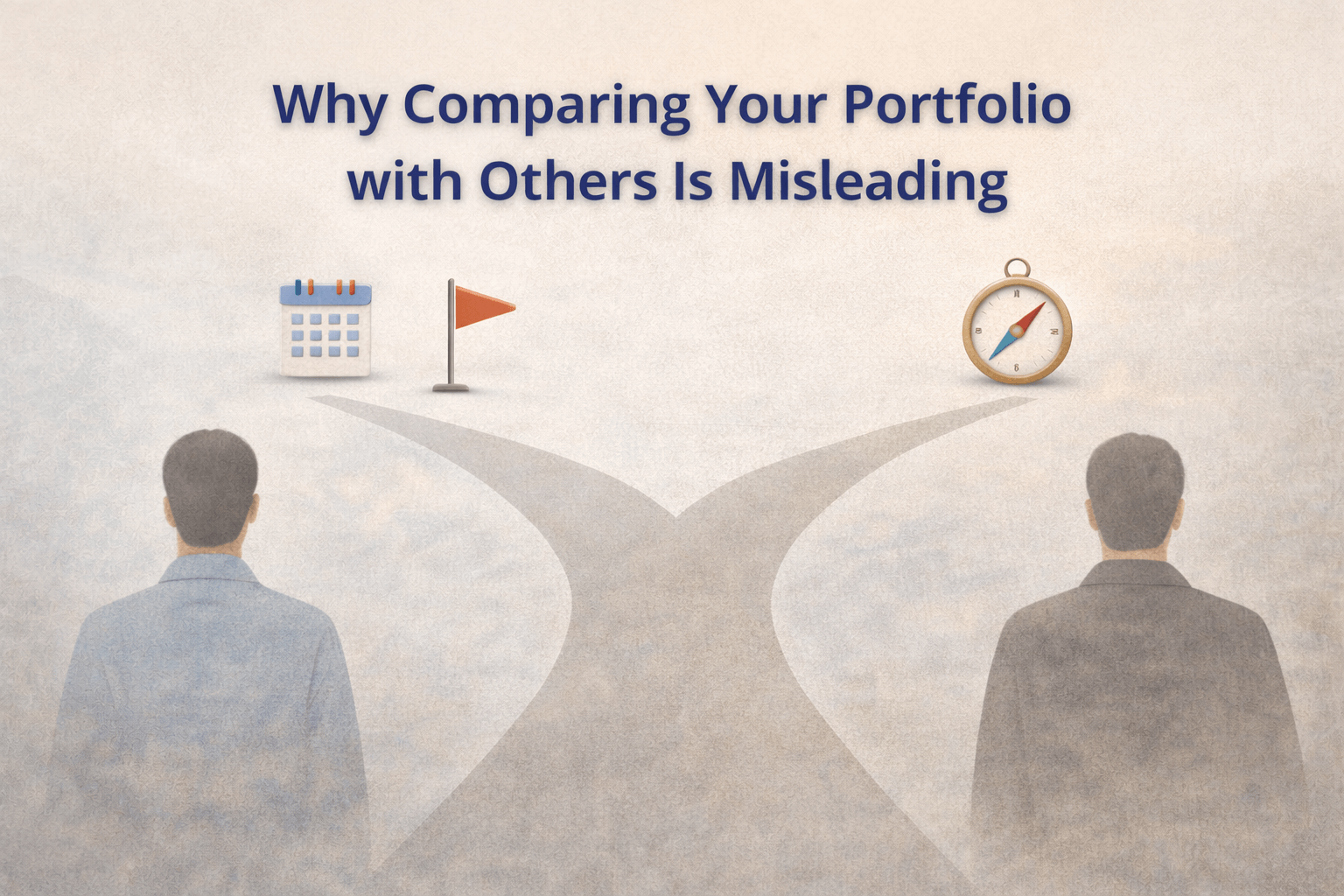
A portfolio built for someone in their early earning years will naturally look very different from one designed for someone in their mid-career phase. Comparing outcomes without understanding intent is like comparing travel time without knowing the destination.
Time Periods Distort Reality
Most portfolio comparisons focus on short periods. One year. Six months. Sometimes even a few weeks.
The entry point or the date of investment matters a lot while comparing. Markets do not move uniformly. Different assets and strategies take turns performing well. A portfolio that looks impressive today may go through a dull phase tomorrow. Another that appears slow today may be doing exactly what it is designed to do.
Short-term comparisons amplify recent performance and hide long-term consistency. Over time, this creates pressure to chase what has already performed well rather than staying aligned with a plan.
Risk Is Often Invisible in Comparisons
Returns are easy to talk about. Risk is not.
When someone shares a strong performance number, the risk taken to achieve it is rarely discussed. Temporary success achieved through higher risk often looks attractive until markets turn unfavourable.
Portfolios are not meant to maximise excitement. They are meant to balance growth with stability in a way that allows investors to stay invested across market cycles. Comparing only outcomes without understanding risk exposure can lead to decisions that feel rewarding initially but prove uncomfortable later.
The Emotional Cost of Comparison
Constant comparison quietly erodes confidence. It creates dissatisfaction even during periods when a portfolio is progressing steadily. Investors begin to second-guess decisions that were made thoughtfully and with clarity.
Over time, this behaviour can lead to frequent changes, loss of discipline, and emotional fatigue. The biggest cost is not financial. It is psychological.
A portfolio that you cannot stay invested in, regardless of how well it is constructed, cannot serve its purpose.
What Matters More Than Comparison
Instead of asking how your portfolio compares with someone else’s, more useful questions often include:
Is this portfolio aligned with my goals?
Does it match my time horizon?
Am I comfortable staying invested through market ups and downs?
Does it allow me to sleep peacefully?
These questions focus on attention where it belongs. On alignment, not competition.
Staying Grounded in Your Own Journey
Markets will always offer reasons to feel either confident or uncertain. There will always be someone who appears to be doing better at any given moment.
Long-term financial progress rarely comes from copying others. It comes from clarity, patience, and consistency. When investors remain anchored to their own plans, short-term comparisons gradually lose their power.
Comparing portfolios may feel useful, but it often distracts from what truly matters. Your financial journey is shaped by your life, not by someone else’s returns.
And in the long run, staying true to that understanding is far more valuable than winning any comparison.

Pratik Vora is a Certified Financial Planner and Associate Partner at Ara Financial Services. He has more than two decade’s experience in Banking & Financial Services Industry.