A few days ago, I came across a report about India’s ongoing battle with unregistered online financial influencers. One phrase in the headline caught my attention: “whack-a-mole.”
One influencer is banned. Another appears. One social media account is blocked. A new channel emerges. A person offering stock tips disappears from one platform, only to resurface elsewhere with a slightly different identity.
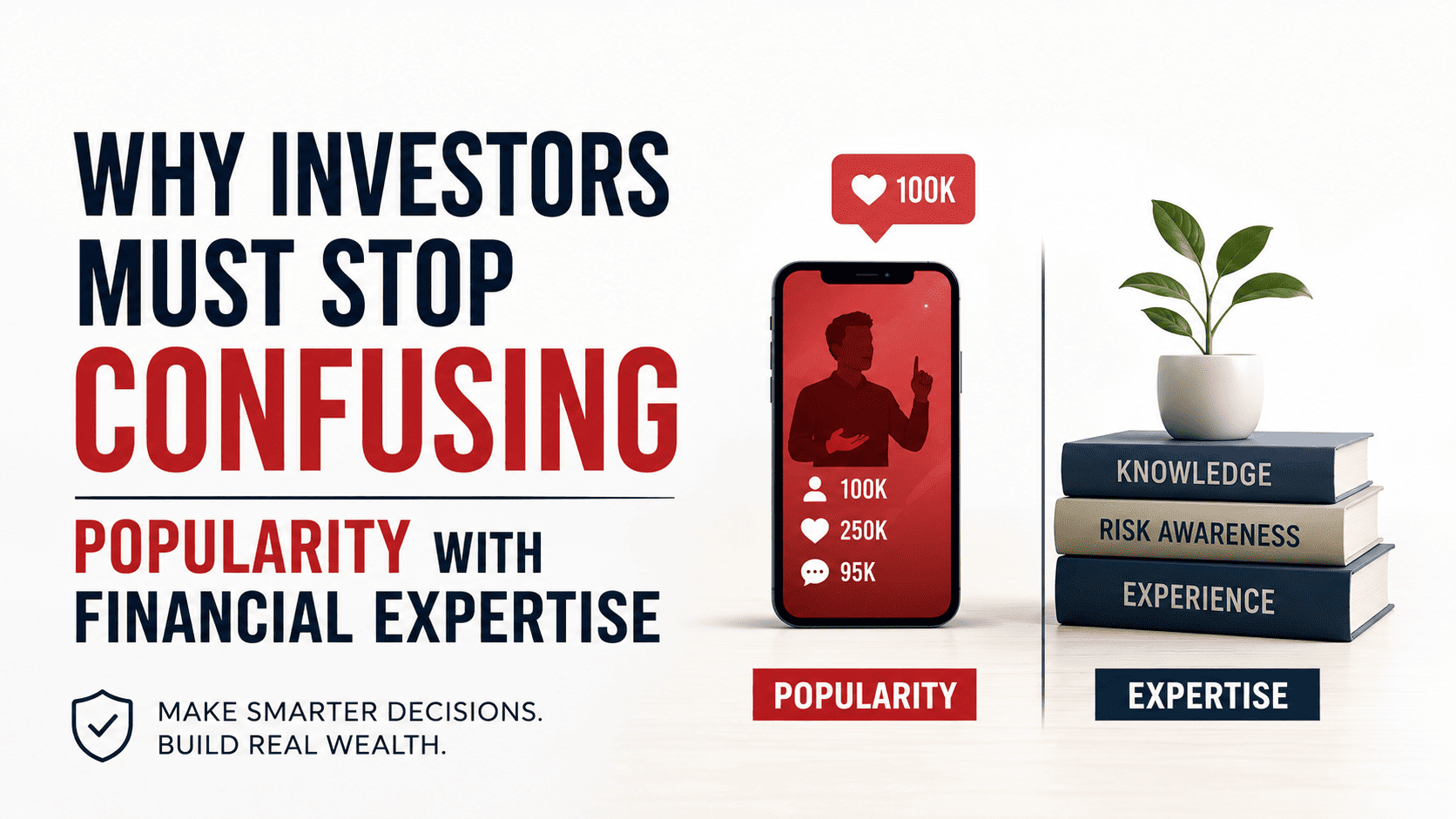
But as a personal finance professional, I believe the bigger problem is that we have started confusing popularity with expertise.
Number of Followers Is Not a Financial Qualification
Today, anyone with a smartphone, a confident voice, and good presentation skills can talk about stocks, mutual funds, options trading, or “wealth creation.”
When we see someone with a large following, it is natural to assume that they are knowledgeable and trustworthy.
In many cases, that assumption may be true. Some individuals have earned their following because they possess deep knowledge, years of experience, and valuable insights. Others may simply be excellent communicators or content creators.
A large following alone should not be the basis for judging someone’s expertise. This is especially important when it comes to financial decisions. Financial markets reward discipline, knowledge, suitability, and risk awareness. But having confidence in your investment will not guarantee good returns.
Do we need gurus or sages?
In today’s fast-moving world, many people aspire to make money quickly and are constantly looking for a guru to show them the way. But when it comes to building lasting wealth, what we truly need are sages, not just gurus.
Over the years, working in financial services has taught me an important lesson: every sage can be a guru, but not every guru is a sage. A sage brings wisdom, experience, patience, and perspective, and these qualities are essential for long-term wealth creation.
The Most Dangerous Promise Is Fast Money
Many retail investors enter the market with a reasonable goal of growing their wealth or creating a passive income source. But social media can distort that goal.
“Earn 200% returns.”
“Make daily income from trading.”
“This stock can become 10X.”
“Join my exclusive WhatsApp group.”
“Don’t miss this opportunity.”
These messages work because they appeal to two powerful emotions: greed and fear of missing out. When someone is filled with greed or fear, financial decision-making begins to break down.
Financial Education and Financial Advice Are Not the Same
Financial education explains concepts. This teaches you how investments work, what asset allocation means, why diversification matters, or how compounding creates wealth over time.
Personalised financial advice is different. It should consider your income, age, responsibilities, existing investments, risk capacity, time horizon and financial goals. A 28-year-old saving for retirement and a 50-year-old preparing to retire cannot blindly follow the same financial advice
Yet social media often presents financial products as universal solutions.
There is no universally “best” investment. The best investment for you is the investment that aligns with your financial goals, risk tolerance, and time horizon.
Why SEBI’s Action Cannot Solve Everything
The Securities and Exchange Board of India has been increasing scrutiny of unregistered financial influencers and misleading investment content. But regulation alone cannot protect every investor from every misleading video, Telegram group, WhatsApp message, or social media post.
The scale of online content is simply too large. This means investor awareness must become the first line of defence. Investors should take responsibility to consume the contents wisely as they are investing their own hard-earned money.
Good Financial Advice Is Often Boring
Many of the videos and posts that capture our attention do so because they focus on topics that are currently trending or emotionally engaging. Their purpose is often to present complex subjects or topics into compelling content that grabs your attention.
At times, such content can create a sense of urgency or the fear of missing out. The content may also give us a sense that we must act immediately, or we will lose a great opportunity. While this can make the content engaging, we should know that financial decisions are hardly ever made in a hurry.
Good financial advice may not be exciting, but it will give you fantastic results if followed sincerely. Wealth creation is usually not dramatic. Wealth is built through robust financial planning, appropriate asset allocation, disciplined investing, diversification, periodic portfolio reviews, and patience.
Building wealth is like planting a coconut tree. You nurture the plant for years before the fruits start to grow. No one becomes a CEO or grows from a ₹30,000 salary to a few lakhs overnight. A business doesn’t become a market leader in a day. Success, in any field, takes years of patience, learning, and consistent effort.
Investments work in much the same way. Wealth creation is not an overnight event. Wealth is the result of time, patience, and the power of compounding working quietly in the background.
There are no flashing lights. No daily screenshots of profits. No constant excitement. And perhaps that is exactly why responsible investing does not “perform well” on social media.
The Question Every Investor Must Ask
Before acting on any online financial recommendation, ask:
- Is this person appropriately qualified or registered for the advice being offered?
- Are they explaining risks as clearly as potential returns?
- Are they creating urgency?
- Are they showing only successful trades?
- Does this recommendation fit my goals and risk profile?
If these questions are uncomfortable to answer, then consider this video as another passing video creating the noise and can freely ignore the suggestions.
Next, ask yourself: If this advice goes wrong, who bears the loss?
Of course, the answer is. “Me! Myself!”
So, by all means, use social media to learn, follow educators, understand concepts, and ask better questions. But never outsource your financial future to someone merely because they are popular online.
One thought can help investors cut through this noise: if you choose not to act immediately on a social media recommendation, you are unlikely to miss anything that truly matters. Genuine wealth-building opportunities generally do not require an urgent decision within a few hours or a single day. If an investment is fundamentally sound and suitable for you, there will usually be enough time to understand the product, evaluate the risks, and make an informed decision. On the other hand, decisions driven purely by urgency or fear of missing out often lead to avoidable mistakes.
In investing, credibility should be earned through competence, transparency, and accountability, and not just by views, likes, and followers. As a smart investor, consult a qualified expert, build a sound financial plan, maintain discipline, and do not get lured by the noise.
Disclaimer: This article is published by Ara Financial Services Pvt. Ltd. (ARN-76035), an AMFI-registered Mutual Fund Distributor, for investor education and general informational purposes only. It is not investment advice or a recommendation to buy, sell or hold any investment product. The views expressed are those of the author and do not necessarily reflect those of Ara Financial Services Pvt. Ltd. Mutual Fund investments are subject to market risks, read all scheme related documents carefully. Please consult your financial and tax advisors before making any investment decision.

Shreedhara is the Founder & Director of Ara Financial Services Pvt. Ltd. He has an experience of over 2 decades in Financial Service Industry with majority of it in guiding individuals and institutions on their investments requirements.