Every market cycle has its favourite story.
When silver runs up sharply, people suddenly become experts in industrial demand, dollar targets, and the next big leg higher. The story sounds intelligent because it arrives after the move has already begun. That is the first trap. Human beings are excellent at converting a recent price move into a convincing narrative. We rarely admit that we are often explaining the past, not forecasting the future.
The same thing happened before.
In 2008, when crude oil touched the much-talked-about $120 zone, the market was full of confident voices saying it would only go higher because global demand was unstoppable. Before that story could mature into a permanent belief, the cycle turned. Commodities do this repeatedly. They climb fast, attract attention, create a new crowd of believers, and then sleep for long periods. The problem is not that commodities are bad assets. The problem is that people mistake a cyclical rally for a structural truth.
That is why commodities demand tactical thinking, not emotional conviction. Entry matters. Exit matters. Position size matters. And most of all, humility matters.
Gold is a slightly different case. Gold is not just a trade; in many portfolios it has become a strategic allocation. And this is not just limited to individuals. The Central Banks too are widening their reserves from global currencies like US Dollar, Euro etc. to gold for multiple reasons. For individual investors, a small part of wealth in gold can serve a role in diversification, stability, and behaviour management. But even here, investors who “accidentally” made money in a sharp rally should remember one uncomfortable truth: what looks like genius in an upcycle is often just timing disguised as skill. The market has a way of rewarding people in a way that makes them overestimate their own ability to repeat the result.
Equity, however, belongs in a different category altogether.
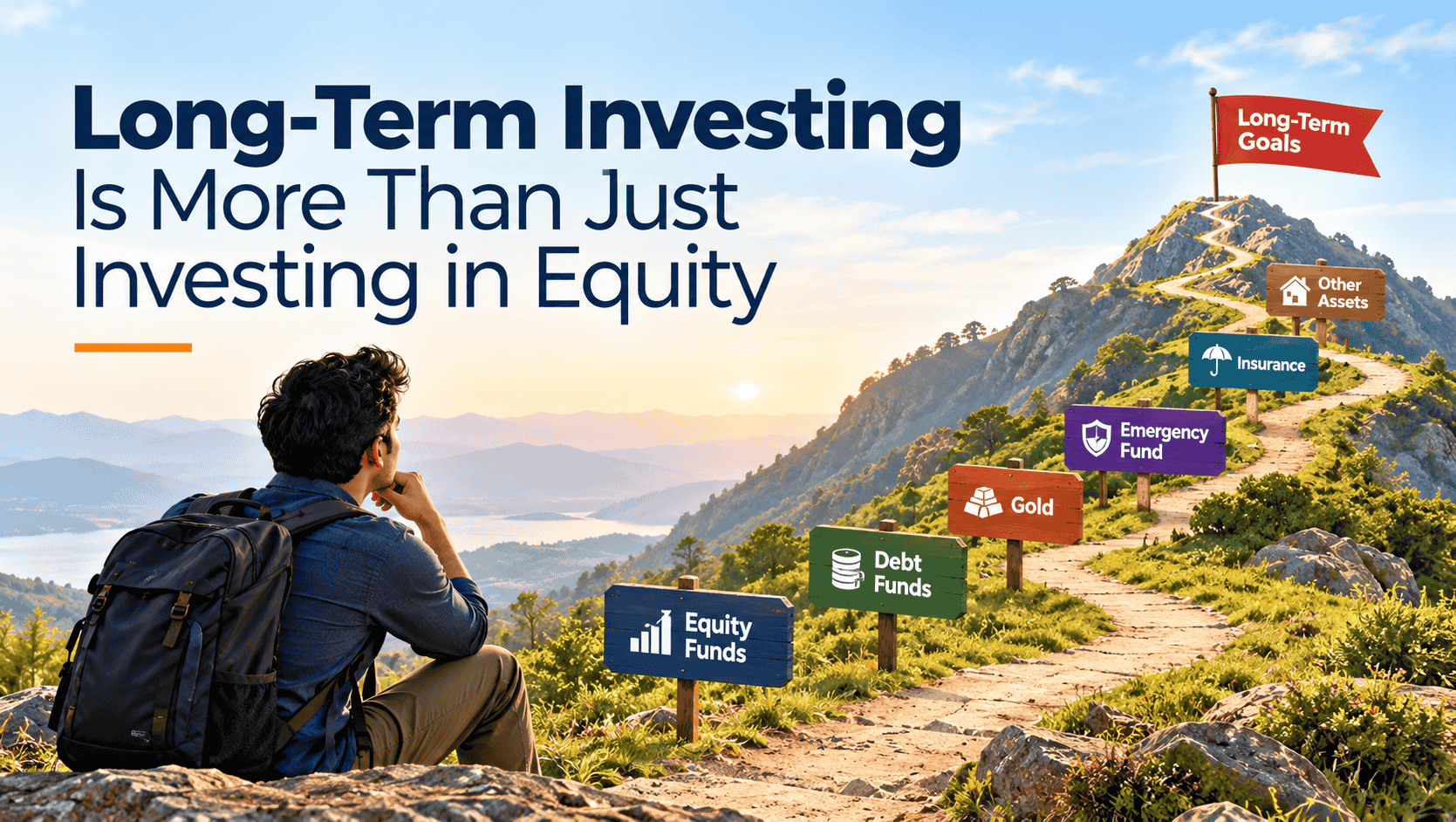
If commodities are tactical, equity is foundational. In today’s environment, equity should form the major part of a financial portfolio because wealth creation needs an engine, not just a hedge. And the engine is not prediction. It is participation.
This is where most investors get stuck. They want certainty before acting. They want the market to “show its hand.” They want the perfect entry, the perfect headline, the perfect expert approval. In reality, the market does not reward the most informed spectator. It rewards the disciplined participant.
Look at the last few major corrections.
In 2008, as the market fell from around 21,000 to 7,000, the dominant fear was not merely that the decline would continue. It was that the decline had no end. People were not discussing valuation; they were discussing collapse. During the COVID crash, some even asked whether the Sensex could go to zero. More recently, when fears around AI disruption surfaced, a new narrative emerged: India was supposedly not even a participant in the AI boom. Then geopolitical tensions, including the Iran conflict, created yet another round of uncertainty. Every day brought a new explanation, a new headline, a new reason to panic.
And yet the market did what it usually does.
It absorbed the fear.
It corrected, it consolidated, it tested patience. The move was not always dramatic in the index, but it was meaningful underneath. There was time correction. There was valuation compression. There was stock-specific damage. There was also the quiet but important process of resetting expectations. Recent market commentary put Nifty 50 valuations in the roughly 19.5x zone in February 2026 and around the 18x to 20.2x range by late March depending on whether the source was using forward or trailing earnings, which is exactly why exact PE readings should be treated as ranges, not religion.
This is where behaviour decides outcomes.
When markets fall, the average investor does not truly ask, “What is the valuation now?” The real question in the mind is, “Can it fall more?” That question is natural, but often useless. It forces people to wait for certainty in a domain where certainty never arrives. By the time certainty does arrive, prices have usually moved.
The best investors are rarely the best predictors. They are usually the best processors. They understand asset allocation. They invest through cycles. They accept volatility as a feature, not a flaw. They do not need to be right on the exact day, because they are right over time.
That is why the people who added money during the lows tend to look wise later. Not because they had special access to information, but because they had the emotional strength to act when others were frozen. In markets, courage is often just preparedness meeting opportunity.
The opposite behaviour is also easy to spot. People wait for the “final low.” They prefer a perfect bottom to a decent valuation. They keep cash idle, convinced that patience is always rewarded. Sometimes it is. Often, it is simply expensive. The market rarely sends a formal invitation before it moves.
This is the real lesson from every cycle, whether it is silver, crude, gold, or equity.
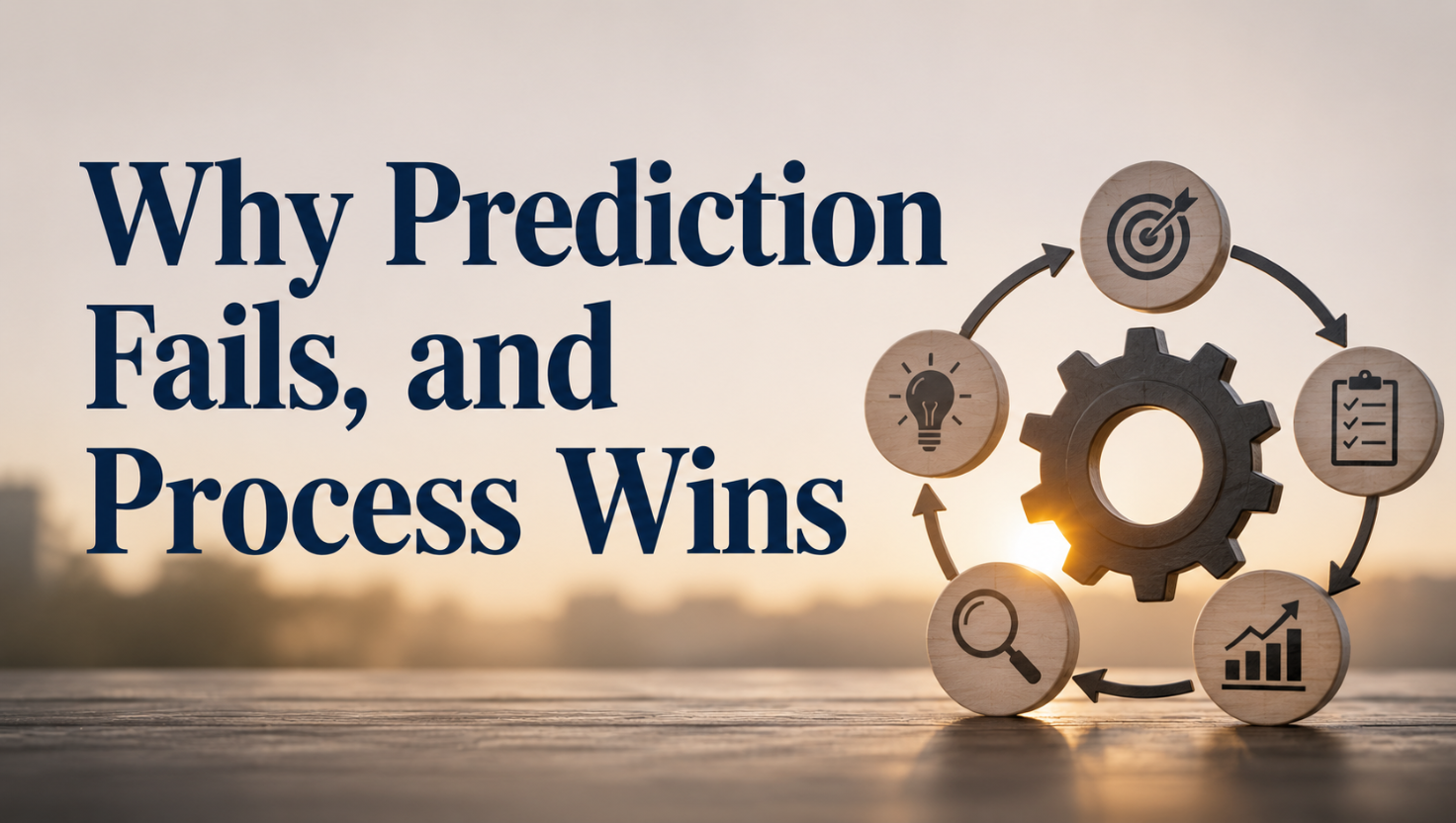
Do not build your investment identity around prediction. Build it around process. Prediction is appealing because it makes you feel in control. Process is powerful because it gives compounding a role. Prediction asks, “Where will the market go?” Process asks, “What should I own, how much should I own, and for how long should I own it?”
One of these is a gamble with better vocabulary. The other is investing.
And that is why, after every rally, every correction, every panic, and every new storyline, the same truth returns: the market will do what it wants. Your job is not to control it. Your job is to remain invested in the right way, at the right size, with the right discipline.
That is how wealth is made.
Not by knowing everything.
By doing the right things consistently when nobody feels comfortable doing them.
Disclaimer: This article is published by Ara Financial Services Pvt. Ltd. (ARN-76035), an AMFI-registered Mutual Fund Distributor, for investor education and general informational purposes only. It is not investment advice or a recommendation to buy, sell or hold any investment product. Mutual Fund investments are subject to market risks, read all scheme related documents carefully. Please consult your financial and tax advisors before making any investment decision.

Shreedhara is the Founder & Director of Ara Financial Services Pvt. Ltd. He has an experience of over 2 decades in Financial Service Industry with majority of it in guiding individuals and institutions on their investments requirements.