
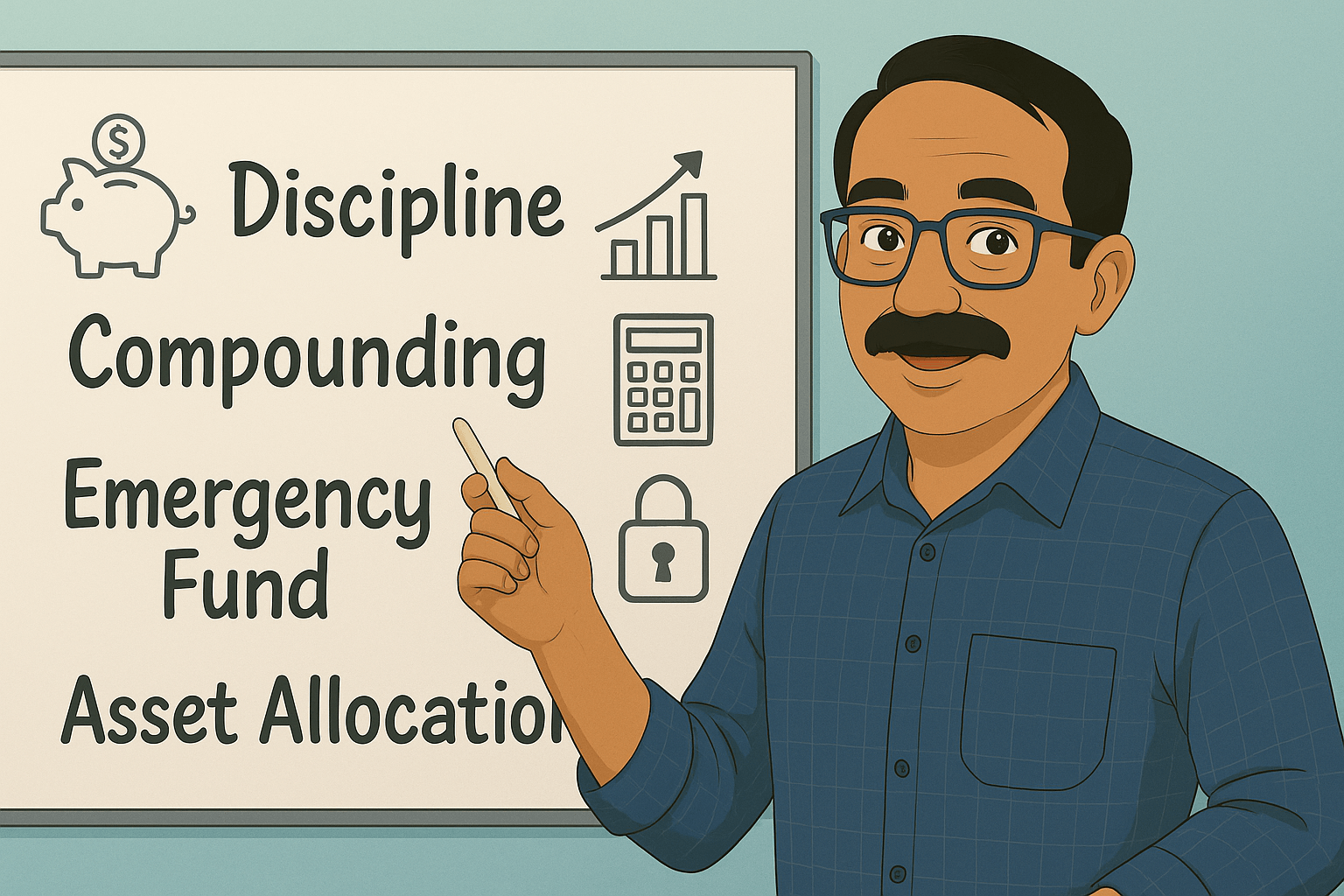
Namma Bhatru’s Byte-sized Life Lessons – 18 Timeless Personal Finance Lessons Everyone Should Know

With over 20 years of experience, Namma Bhatru shares 18 powerful, byte-sized personal finance lessons. Whether you're starting or refining your money journey, this guide offers practical and timeless insights for a financially secure future.

With over 20 years of experience in the financial field, I have witnessed countless market cycles and navigated many of my clients through the ups and downs of market, life cycles and job market. Through all these experiences, I have observed a few consistent patterns and practices that make a real difference.

Today, I’m sharing 18 timeless lessons in personal finance with you. Some of these may sound familiar – maybe you’ve heard them before or even experienced them. If you are new to the world of investing, consider this as your zero-cost first-hand guide. If you are a seasoned investor, it can offer reassurance that you are on the right track or nudge you to realign your path.

As I reflect on these insights, I often wish I had received such guidance when I began my journey.

18 Timeless Personal Finance Lessons

  • Wealth is built more on behaviour than intelligence. Your mindset matters more than your math skills.
  • Maintain an emergency fund that covers at least 12–18 months of expenses.
  • Your personal finance depends 99% on discipline and 1% luck.
  • Track every expense — yes, even the smallest one. Awareness is the first step to control.
  • Make saving and investing your life mantra. Stay the course through life’s ups and downs.
  • Stay away from people who promise quick money. If it sounds too good to be true, it probably is.
  • Avoid so-called ‘finance helpers’ or financial influencers who push specific schemes, funds, stocks, or companies. They usually have a hidden interest in those schemes.
  • Use credit cards wisely, reserve them for emergencies or the convenience of transactions, not for buying on credit. Don’t let convenience turn into an expensive habit.
  • Buying on EMI usually means you can’t afford it. Unless it has great utility value, do not fall for instant gratification to buy things you don’t need.
  • Spend on meaningful experiences, not flashy possessions.
  • Prioritize asset allocation and comprehensive financial planning.
  • Follow time-tested investment principles as part of your financial planning.
  • Do not select products based on their historical performance. Select products based on your goals and the timelines of your goals.
  • Stock picking requires time, expertise, and access to the right information. If you lack these, mutual funds are a smart alternative. Invest through SIPs to build wealth over the long term.
  • Build a financial portfolio based on your goals.
    Low-risk products for short-term goals, medium-risk products for medium-term goals, and high-risk products for long-term goals
  • Don’t invest based on trends, headlines, or hype. Chasing fads rarely leads to sustainable wealth.
  • Understand the importance of the power of compounding. Learn, apply and make it work for you.
  • Be selective while sharing your personal details like phone number or email ID.
    Protect your privacy and your peace. Do not fall prey to scammers.

Final Thoughts

Financial freedom isn’t a dream — it’s a series of mindful choices.

Start applying even a few of these principles, and you’ll be surprised at the difference they can make.

With the right habits and mindset, anyone can build a secure and fulfilling financial life.

3 thoughts on “Namma Bhatru’s Byte-sized Life Lessons – 18 Timeless Personal Finance Lessons Everyone Should Know”

  1. P S Gurumoorthy Bhat

    Very useful for the beginners and reassuring for those who are already familiar with the financial journey.
    Normally they say emergency fund should cover 6 months expenses . You have made it 12-18 months. That is a welcome change. You are assured of 1 – 1 1/2 years of smooth sailing.
    Overall it’s very good .

Leave a Comment

Your email address will not be published. Required fields are marked *

ಉಯಿಲು (Will): ನೀವು ತಿಳಿದುಕೊಳ್ಳಬೇಕಾದ ಎಲ್ಲ ವಿಷಯಗಳು ಇಲ್ಲಿದೆ.

ಉಯಿಲು (Will): ನೀವು ತಿಳಿದುಕೊಳ್ಳಬೇಕಾದ ಎಲ್ಲ ವಿಷಯಗಳು ಇಲ್ಲಿದೆ. 

ಕಳೆದ ಐದು ವರ್ಷಗಳಲ್ಲಿ, ಜನರು Willನ ಬಗ್ಗೆ ಯೋಚಿಸುವ ರೀತಿಯಲ್ಲಿ ಗಮನಾರ್ಹ ಬದಲಾವಣೆಯನ್ನು ನಾನು ಕಂಡಿದ್ದೇನೆ.  ಹಿಂದೆ, ಗ್ರಾಹಕರೊಂದಿಗೆ ಈ ವಿಷಯವನ್ನು ಪ್ರಸ್ತಾಪಿಸಿದಾಗ, ಅವರ ಪ್ರತಿಕ್ರಿಯೆ ಹೇಗಿರಬಹುದು ಎಂಬುದನ್ನು ನಾನು ಬಹುತೇಕ ಊಹಿಸಬಹುದಾಗಿತ್ತು. ಕೆಲವರು ತಕ್ಷಣವೇ ವಿಷಯವನ್ನು ಬದಲಾಯಿಸುತ್ತಿದ್ದರು, ಇನ್ನೂ ಕೆಲವರು, “ಇದರ ಬಗ್ಗೆ ನಂತರ ಮಾತನಾಡೋಣ” ಎಂದು ವಿನಯದಿಂದ ಹೇಳುತ್ತಿದ್ದರು. ಹಲವರು Will ಎನ್ನುವುದು ವೃದ್ಧಾಪ್ಯದಲ್ಲಿ ಮಾಡುವ ವಿಷಯ ಎಂದು ಭಾವಿಸುತ್ತಿದ್ದರು. ಕೆಲವರಿಗೆ willನ ಬಗ್ಗೆ ಮಾತನಾಡುವುದೇ ಅಶುಭ ಅಥವಾ ದುರಾದೃಷ್ಟವನ್ನು ಆಹ್ವಾನಿಸುವಂತದ್ದು ಎಂಬ ನಂಬಿಕೆಯೂ ಇತ್ತು.  ಕೊರೊನಾ ಒಂದು ಮಹತ್ವದ ತಿರುವಾಗಿ ಪರಿಣಮಿಸಿದೆ. ಜೀವನ ಅನಿಶ್ಚಿತವಾದರೂ, ನಮ್ಮ ಪ್ರೀತಿಪಾತ್ರರ ಭವಿಷ್ಯವನ್ನು ಯೋಜಿಸುವುದು ನಮ್ಮ ಕೈಯಲ್ಲೇ ಇದೆ ಎಂಬುದನ್ನು ಅದು ನಮ್ಮಲ್ಲಿ ಅನೇಕರಿಗೆ ನೆನಪಿಸಿತು. ಮುಂಚಿತವಾಗಿ ಯೋಜಿಸುವುದು ನಮ್ಮ ಕುಟುಂಬಕ್ಕಾಗಿ ನಾವು ನೆರವೇರಿಸಬಹುದಾದ ಅತ್ಯಂತ ದೊಡ್ಡ ಜವಾಬ್ದಾರಿಗಳಲ್ಲಿ ಒಂದಾಗಿದೆ. ಮಹಾಮಾರಿಯ ನಂತರ ಈ ಸತ್ಯವನ್ನು ಅರಿತುಕೊಂಡ ಕಾರಣ, ಜನರು ಈಗ will ಮತ್ತು Estate Planningಬಗ್ಗೆ ಹೆಚ್ಚು ಮುಕ್ತವಾಗಿ ಚರ್ಚಿಸಲು ಆರಂಭಿಸಿದ್ದಾರೆ.  ನನ್ನ ಅಭಿಪ್ರಾಯದಲ್ಲಿ, ನಿಮ್ಮ ಆಸ್ತಿಯ ಪ್ರಮಾಣ ಎಷ್ಟೇ ಇರಲಿ, ಪ್ರತಿಯೊಂದು ಹಣಕಾಸು ಯೋಜನೆ (Financial Planning) ಕುರಿತ ಸಂಭಾಷಣೆಯ ಭಾಗವಾಗಿ Willನ ಬಗ್ಗೆ ಚರ್ಚೆಯಾಗಬೇಕು. ನೀವು ಮನೆ ಹೊಂದಿರಲಿ, ಹೂಡಿಕೆಗಳನ್ನು ಮಾಡಿರಲಿ, ಬ್ಯಾಂಕ್ ಖಾತೆಗಳನ್ನು ನಿರ್ವಹಿಸುತ್ತಿರಲಿ ಅಥವಾ ಈಗಷ್ಟೇ ಸಂಪತ್ತನ್ನು ನಿರ್ಮಿಸಲು ಆರಂಭಿಸಿರಲಿ, Will ಎಲ್ಲರಿಗೂ ಪ್ರಸ್ತುತವಾಗಿದೆ.  ಆರಂಭಿಸುವ ಮೊದಲು, ಒಂದು ಸಾಮಾನ್ಯ ಗೊಂದಲವನ್ನು ನಿವಾರಿಸೋಣ  Will, Estate Planning, ಮತ್ತು Succession Planning ಎಂಬ ಪದಗಳನ್ನು ಅನೇಕ ಬಾರಿ ಒಂದೇ ಅರ್ಥದಲ್ಲಿ ಬಳಸಲಾಗುತ್ತದೆ. ಆದರೆ ಅವೆಲ್ಲವೂ ಒಂದೇ ಅಲ್ಲ.  ಎಸ್ಟೇಟ್ ಪ್ಲಾನಿಂಗ್ (Estate Planning) ಎಂದರೆ, ನಿಮ್ಮ ಸಂಪತ್ತು, ಆಸ್ತಿಗಳು ಮತ್ತು ಹಣಕಾಸಿನ ವ್ಯವಹಾರಗಳನ್ನು ಹೇಗೆ ನಿರ್ವಹಿಸಬೇಕು ಹಾಗೂ ಅಂತಿಮವಾಗಿ ಯಾರಿಗೆ ಹೇಗೆ ವರ್ಗಾಯಿಸಬೇಕು ಎಂಬುದನ್ನು ನಿರ್ಧರಿಸುವ ವಿಶಾಲ ಪ್ರಕ್ರಿಯೆ.  ಉಯಿಲು (Will) ಎನ್ನುವುದು ಎಸ್ಟೇಟ್ ಪ್ಲಾನಿಂಗ್‌ನಲ್ಲಿನ ಅತ್ಯಂತ ಪ್ರಮುಖ ಸಾಧನಗಳಲ್ಲಿ ಒಂದಾಗಿದೆ. ಇದು ನಿಮ್ಮ ಇಚ್ಛೆಗಳನ್ನು ದಾಖಲಿಸುತ್ತದೆ ಮತ್ತು ನಿಮ್ಮ ಸಂಪತ್ತು ನೀವು ಬಯಸಿದ ರೀತಿಯಲ್ಲಿಯೇ ವರ್ಗಾವಣೆಯಾಗುವಂತೆ ಮಾಡಲು ಸಹಾಯ ಮಾಡುತ್ತದೆ.  ಇನ್ನೊಂದೆಡೆ, ಸಕ್ಸೆಷನ್ ಪ್ಲಾನಿಂಗ್ (Succession Planning) ಸಾಮಾನ್ಯವಾಗಿ ಒಂದು ವ್ಯವಹಾರದ ಮಾಲೀಕತ್ವ ಮತ್ತು ನಿರ್ವಹಣೆಯನ್ನು ಮುಂದಿನ ತಲೆಮಾರಿಗೆ ಅಥವಾ ನೀವು ಆಯ್ಕೆ ಮಾಡಿದ ಉತ್ತರಾಧಿಕಾರಿಗಳಿಗೆ ಹಸ್ತಾಂತರಿಸುವುದಕ್ಕೆ ಸಂಬಂಧಿಸಿದೆ.  ಬಹುತೇಕ ವ್ಯಕ್ತಿಗಳು ಮತ್ತು ಕುಟುಂಬಗಳಿಗೆ, ಉಯಿಲನ್ನು ಬರೆಯುವುದು ಎಸ್ಟೇಟ್ ಪ್ಲಾನಿಂಗ್‌ನ ಮೊದಲ ಮತ್ತು ಅತ್ಯಂತ ಪ್ರಮುಖ ಹೆಜ್ಜೆಯಾಗಿದೆ.  ಉಯಿಲಿನ ಬಗ್ಗೆ ಇರುವ ಕೆಲವು ಸಾಮಾನ್ಯ ತಪ್ಪು ಕಲ್ಪನೆಗಳನ್ನು ದೂರ ಮಾಡೋಣ  ವರ್ಷಗಳ ಅನುಭವದಲ್ಲಿ, ಕೆಲವು ತಪ್ಪು ಕಲ್ಪನೆಗಳನ್ನು ನಾನು ಮತ್ತೆ ಮತ್ತೆ ಕೇಳಿದ್ದೇನೆ.  “ನಾನು ಉಯಿಲು ಬರೆಯಲು ಇನ್ನೂ ತುಂಬಾ ಚಿಕ್ಕವನು / ಚಿಕ್ಕವಳು.”  ಉಯಿಲು ವಯಸ್ಸಿನ ಬಗ್ಗೆ ಅಲ್ಲ. ಅದು ಜವಾಬ್ದಾರಿಯ ಬಗ್ಗೆ. ನೀವು ಸಂಪಾದನೆ ಮಾಡಲು ಆರಂಭಿಸಿದ್ದರೆ, ಹೂಡಿಕೆಗಳನ್ನು ಹೊಂದಿದ್ದರೆ, ಆಸ್ತಿಗಳನ್ನು ಹೊಂದಿದ್ದರೆ ಅಥವಾ ನಿಮ್ಮ ಮೇಲೆ ಅವಲಂಬಿತರಾಗಿರುವವರು ಇದ್ದರೆ, ನೀವು ಉಯಿಲು ಬರೆಯುವುದನ್ನು ಪರಿಗಣಿಸಬಹುದು.  “ನನ್ನ ಬಳಿ ಅಷ್ಟು ದೊಡ್ಡ ಸಂಪತ್ತೇ ಇಲ್ಲ.”  ಉಯಿಲು ಕೇವಲ ಶ್ರೀಮಂತ ಕುಟುಂಬಗಳಿಗಷ್ಟೇ ಇರುವುದಲ್ಲ. ನಿಮ್ಮ ಬಳಿ ಏನೇ ಇದ್ದರೂ, ಅದು ಉಳಿತಾಯ ಖಾತೆಯಾಗಿರಲಿ, ಮ್ಯೂಚುವಲ್ ಫಂಡ್‌ಗಳಾಗಿರಲಿ, ವಿಮಾ ಪಾಲಿಸಿಗಳಾಗಿರಲಿ ಅಥವಾ ಒಂದು ಮನೆಯಾಗಿರಲಿ, ಅದು ನೀವು ಬಯಸುವ ವ್ಯಕ್ತಿಗಳ ಕೈಗೆ ತಲುಪುವುದನ್ನು ಖಚಿತಪಡಿಸಿಕೊಳ್ಳುವುದೇ ಉಯಿಲಿನ ಉದ್ದೇಶ.  “ನನ್ನ ಕುಟುಂಬದವರು ಎಲ್ಲವನ್ನೂ ನೋಡಿಕೊಳ್ಳುತ್ತಾರೆ.”  ಬಹುಶಃ ಅವರು ನೋಡಿಕೊಳ್ಳಬಹುದು. ಆದರೆ ಹೆಚ್ಚುವರಿ ಒತ್ತಡ, ದಾಖಲೆಗಳ ಕೆಲಸ, ವಿಳಂಬ ಮತ್ತು ಕೆಲವೊಮ್ಮೆ ಭಿನ್ನಾಭಿಪ್ರಾಯಗಳಿಲ್ಲದೆ ಅಲ್ಲ. ಒಂದು ಸರಳ ಉಯಿಲು ನಿಮ್ಮ ಪ್ರೀತಿಪಾತ್ರರನ್ನು ಕಳೆದುಕೊಂಡ ನೋವನ್ನು ಕಡಿಮೆ ಮಾಡಲು ಸಾಧ್ಯವಿಲ್ಲ. ಆದರೆ ಆ ಕಠಿಣ ಸಮಯದಲ್ಲಿ ನಿಮ್ಮ ಕುಟುಂಬವು ಅನಗತ್ಯ ಗೊಂದಲ, ದಾಖಲೆಗಳ ಕೆಲಸ ಮತ್ತು ಕಷ್ಟಕರ ನಿರ್ಧಾರಗಳಿಂದ ತಪ್ಪಿಸಿಕೊಳ್ಳಲು ಖಂಡಿತವಾಗಿಯೂ ಸಹಾಯ ಮಾಡುತ್ತದೆ.  ಉಯಿಲು (Will) ಎಂದರೇನು?  ...
Read More →
Emergency fund

The Emergency Fund: The Brake That Lets You Accelerate

One of the biggest mistakes I see people make is focusing all their attention on returns, market opportunities, and wealth creation. They want to know ...
Read More →
Financial influencers

Why Investors Must Stop Confusing Popularity with Financial Expertise

A few days ago, I came across a report about India’s ongoing battle with unregistered online financial influencers. One phrase in the headline caught my ...
Read More →

Choose The Life Stage That Describes You The Best

Ask us Anything
Open chat

Let’s Talk About Your Financial Goals – Aram Se

Prefer chatting on WhatsApp?

WhatsApp logo Continue on WhatsApp